

A recent Australian Patent Office decision found a claim using wear-rate information ineligible, but a claim obtaining wear data from a sensor eligible. That is an intriguing—and arguably difficult—line to draw.
The recent decision in CQMS Pty Ltd v Joy Global Surface Mining Inc generated a curious result [1].
The patent application contained two claim sets concerned with wear components on mining machines. Both were directed to predictive maintenance and deciding what to do with a component as it wore down.
Method Claim 14 was found to be patentable subject matter. System Claim 1 was not.
The difference was a wear detection device vs determining a wear rate of the component.
CQMS is the first APO decision to substantively consider manner of manufacture following the Full Federal Court’s 2025 decision in Aristocrat Technologies Australia Pty Ltd v Commissioner of Patents, and raises the question of whether the APO has really shifted their approach following that decision [2].
What was actually claimed?
Claim 1 was directed to a ‘system for predicting replacement of a component of a mining machine’. In broad terms, the processor determined a wear rate from the current and historical dimensions of the component, determined a replacement cost—including downtime, material and operating costs—and then produced a replacement recommendation using the wear rate, replacement cost and discard criteria [3].
Claim 14 approached the problem differently. It required the processor to receive data collected by a wear detection device representing the current dimension of the component. The method compared that dimension with discard criteria and, if the component was not yet ready to be discarded, predicted a future measurement and could add the component to a pool of used components.
The hearing officer found claim 1, its relevant dependent claims and the associated computer-readable-medium claim were not directed to a manner of manufacture. Claim 14—and claims that added the wear detection device—crossed the subject-matter threshold. Some of those claims still failed on separate support and enablement grounds, so this was not a finding that they were otherwise valid [4].
Still, the subject-matter distinction is striking: wear information was not enough, but a device that obtained wear information was.
Why is the wear information being obtained?
The starting question, in my view, should be a practical one: why is anyone obtaining the wear information?
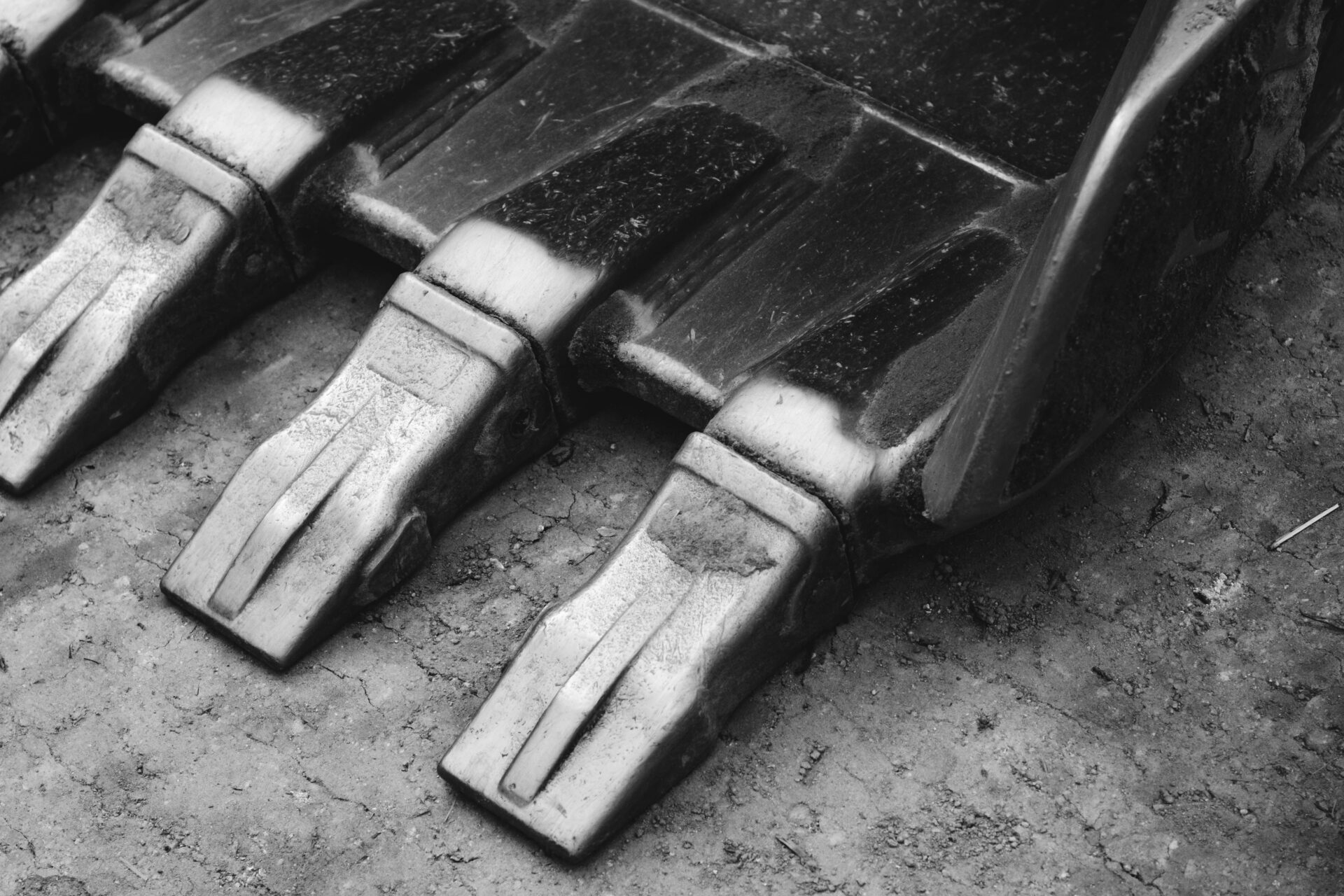
A mine operator is not measuring a ground-engaging tool out of intellectual curiosity. The dimension and wear rate describe deterioration of a physical component on a physical machine. The information is obtained to work out when the component should be replaced, repaired, rotated or retained in service. Its dominant purpose is preventative maintenance—avoiding premature disposal, unscheduled downtime, loss of productivity and equipment damage.
That context matters. Almost every computer-implemented invention deals with information. Treating information as inherently abstract tells us very little. The more useful questions are what the information represents, why it is being generated and what practical result it is used to produce.
NRDC, IBM, CCOM—and putting information to work
NRDC remains the foundation of Australian patentable-subject-matter law. The invention used the discovery of a selective effect of a known herbicide and was directed to the application of that knowledge to improve yields of those crops unaffected by the herbicide. The discovery was not patented in the abstract. The information was put to work to produce an artificially created state of affairs with economic utility [5], namely improved crop yields.
The same broad approach can be seen in the early computer cases. IBM concerned calculations used to produce an improved curve image on a display [6]. CCOM concerned a particular way of representing and searching Chinese character strokes so that Chinese characters could be selected using a standard computer keyboard [7]. Neither case turned on the computer hardware being inventive. The focus was the useful result achieved by the claimed combination applying NRDC.
Indeed, RPL Central later warned that an overly simplistic or abstract characterisation could reduce IBM to ‘drawing a curve on a computer’ and CCOM to converting words into Chinese characters [8]. That warning feels particularly relevant to describing predictive maintenance as merely “a decision matrix”. This completely ignores the context of the invention (improved predictive maintenance), and why wear rate information is obtained.
What Aristocrat 2025 was meant to change
Aristocrat 2025 was directed to the question of whether an electronic gaming machine was directed to patentable subject matter. One of the central themes of the judgment is the rejection of an unduly narrow approach to characterisation favoured by the Commissioner of Patents. The Court adopted a characterisation of the invention that considered the claimed combination as a whole rather than focusing exclusively on the alleged abstract idea embodied in the gaming rules.
The Full Court in Aristocrat emphasized that characterisation must reflect the claim as a whole, including both inventive and non-inventive elements and the way they interact [9].
Rather than asking where the invention can be implemented on conventional computing technology, the Full Court stated the better question was to ask whether the invention is:
- an abstract idea manipulated on a computer; or
- an abstract idea implemented on a computer to produce an artificial state of affairs and a useful result.
Applied to CQMS, there are at least two possible characterisations. One is the hearing officer’s: a computerised decision matrix that weighs competing costs. The other is a predictive-maintenance system that uses the measured condition and deterioration rate of a machine component to generate a machine-specific replacement state. The second description arguably says more about why the claimed information exists and what the system is for.
The hearing officer and the Patent Manual
The procedural history also deserves attention. The opposition was heard in November 2025. IP Australia published proposed changes to the Patent Manual in March 2026, after which the hearing officer invited further submissions on manner of manufacture. The Manual was amended again after those submissions; those later changes were considered minor, and no further submissions were sought [10].
The decision recognised Aristocrat as the most recent authority but worked closely through the Manual’s framework—starting with the physical elements and then considering altered operation and technical problems inside or outside the computer. The current Manual now quotes Aristocrat and says all claim integers and their practical interoperation must be considered. The decision nevertheless preserves much of the analytical structure developed from Research Affiliates and RPL Central [11].
The Manual is useful guidance for examiners, but it does not rise above the statutory requirements and their interpretation by the courts. The risk is that an administrative framework becomes the test, rather than assisting the Examiner to apply the test established by the courts. The Manual must follow NRDC and Aristocrat—not the other way around.
Wear information versus wear detection
There is a clear distinction between the two claim sets. Claim 1 did not require a sensor, a particular wear model or actual execution of the recommendation. The current dimension could be measured manually and entered into the system. The physical replacement occurred outside the claim. Claim 14, by contrast, expressly linked a detector, the component and the processor, and the evidence did not establish that the claimed detector use was common general knowledge [12].
Those are legitimate matters of claim scope. They may also raise novelty, inventive step, support or enablement issues. But manner of manufacture asks a different threshold question: is this the kind of practical application for which a patent may be granted?
Once physical wear data is used to determine a maintenance state for the machine component, there is a strong argument that the information has been applied to a useful technical purpose. The invention does not become informational in the abstract simply because a human might act on the output, or because the broadest claim does not require the sensor that produced the input.
The economic-benefit tension
CQMS exposes a second tension. NRDC treated economic significance as a positive feature of the patentable result. Aristocrat returned the inquiry to whether implementation produces an artificial state of affairs and a useful result. Yet in CQMS, the focus on downtime, material and operating costs helped turn claim 1 into a business scheme.
The hearing officer’s reasoning was more nuanced than saying that economic benefit is always bad. The point was that overall cost might dominate the recommendation, so the method did not necessarily maximise material use or productivity. Optimising material use was described as logistical rather than technical, and the physical consequences depended on someone following the recommendation [13].
Even so, the practical tension remains. Preventative maintenance is undertaken precisely because technical decisions have economic consequences. A replacement decision can take account of cost without ceasing to be a decision about the condition and operation of machinery. If commercial value turns a technical maintenance method into a business scheme, the economic significance relied on in NRDC starts doing the opposite work.
Welcome Real-Time is a useful reminder that a commercial context is not disqualifying. That invention supported multiple loyalty programs—a business application if ever there was one—but the implemented smart-card and point-of-sale system produced an artificial and useful result [14]. The right question was what the system did, not whether money or customer incentives were involved.
Practical takeaways
Regardless of whether one agrees with the outcome, several practical lessons emerge
Focus on the physical problem. Specifications should clearly identify the technical problem being solved and explain why the information being collected is technically relevant.
Explain why the information matters. Rather than merely describing data processing, applicants should emphasise that the information represents a physical condition of a physical system and is used to influence operation or maintenance of that system. Tie it to a physical result or outcome.
Characterisation remains critical. Applicants should resist characterisations that reduce inventions to recommendations, optimisation or decision-making. The better characterisation may be operation, maintenance or control of a physical system using technical information concerning that system.
Create Claim Depth. Preserve the broader information-use claim, but add claims tied to a sensor or defined data source, a machine-specific maintenance instruction, communication to a control or maintenance system, and—where supported—physical intervention or closed-loop control.
Keep economic factors in context. Describe costs as constraints on a technical maintenance decision, rather than allowing cost optimisation to become the apparent purpose of the invention.
Lead with the authorities. Use NRDC, IBM, CCOM and Aristocrat to explain the governing principles. Address the Manual where necessary but make clear that it is administrative guidance and cannot narrow the court-established test.
Conclusion
CQMS is important because it is the first published Patent Office decision to apply the manner-of-manufacture test for a computer-implemented invention following the 2025 Full Court decision in Aristocrat. It suggests that the Patent Office has not fully embraced that decision and is still more comfortable finding patentability in the device that obtains technical information as opposed to the system putting that information to practical use.
This seems inconsistent with NRDC.
Wear information is not abstract information detached from the physical world. It represents physical deterioration of physical components. It is gathered for the specific purpose of making decisions about operation and maintenance of physical machinery.
NRDC teaches that practical application of information can constitute patentable subject matter. Aristocrat 2025 confirmed that the focus should be on whether the abstract idea is implemented on a computer to produce an artificial state of affairs and a useful result.
Against that background, there is a credible argument that predictive maintenance inventions sit closer to the patentable side of the line than traditional business-scheme cases. The fact that the invention culminates in a recommendation rather than an automatic machine command should not necessarily be decisive. The real question is why the information is obtained and what practical result it is ultimately intended to achieve.
In predictive maintenance systems, the answer is straightforward: the information is obtained because machinery wears, and it is used to decide what should happen to that machinery next. That may be precisely the kind of practical application of information that NRDC was designed to protect.
[1] CQMS Pty Ltd v Joy Global Surface Mining Inc [2026] APO 19 (18 August 2026) (‘CQMS’).
[2] Aristocrat Technologies Australia Pty Ltd v Commissioner of Patents [2025] FCAFC 131, [126]–[132] (‘Aristocrat 2025’).
[3] CQMS [24] (claim 1).
[4] CQMS [333]–[342]. The opposition also succeeded on various novelty, inventive step, support, enablement and utility grounds; three months were allowed for amendments.
[5] National Research Development Corporation v Commissioner of Patents (1959) 102 CLR 252, 269–77 (‘NRDC’).
[6] International Business Machines Corporation v Commissioner of Patents (1991) 33 FCR 218, 225–6 (‘IBM’).
[7] CCOM Pty Ltd v Jiejing Pty Ltd (1994) 51 FCR 260, 291–5 (‘CCOM’).
[8] Commissioner of Patents v RPL Central Pty Ltd [2015] FCAFC 177; (2015) 238 FCR 27, [105] (‘RPL Central’).
[9] Aristocrat Technologies Australia Pty Ltd v Commissioner of Patents [2025] FCAFC 131, [126]–[132] (‘Aristocrat 2025’).
[10] CQMS [293]–[294].
[11] IP Australia, Patent Manual of Practice and Procedure, ‘5.6.8.6 Computer Implemented Inventions’ (accessed 31 August 2026) <https://manuals.ipaustralia.gov.au/index.php/patent/5.6.8.6-computer-implemented-inventions-schemes-and-business-methods>.
[12] CQMS [317]–[334].
[13] CQMS [327]–[333].
[14] Welcome Real-Time SA v Catuity Inc [2001] FCA 445; (2001) 51 IPR 327, [125]–[129] (‘Welcome Real-Time’).


