

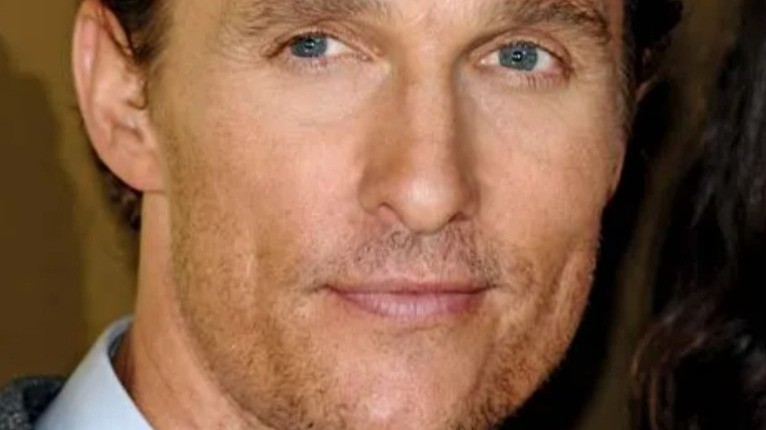
Image credit: https://www.britannica.com/biography/Matthew-McConaughey
AI can now impersonate you better than most humans. Who owns that version of you?
If your voice, face, name or persona can be replicated by AI in under 30 seconds, your identity is no longer just personal. It is commercial. And if it is commercial, it needs protection.
That is why what Matthew McConaughey has done recently deserves attention well beyond Hollywood.
McConaughey has successfully prosecuted and obtained registration of multiple US trade marks covering audio and video recordings of his voice and likeness, including his iconic “Alright, alright, alright”, in connection with media and entertainment services. These are not pending filings or speculative applications. They are enforceable federal rights.
This is not ego. It is strategy.
- This is not ‘trade marking’ a person
Let’s clear this up immediately. McConaughey has not trade marked himself. Trade marks do not confer ownership over a human being.
What trade marks protect are indicators of commercial origin. They protect the signals that tell consumers who is behind a product, service or message.
In an AI context, that distinction is critical. If an AI generated video or voice recording suggests endorsement, affiliation or authorisation that does not exist, the legal issue becomes one of misrepresentation and consumer confusion. That is precisely the terrain trade marks law has always occupied.
This is not a reinvention of trade marks law. It is its application to a new commercial reality.
- Why registered trade marks matter in the AI era
Personality and publicity rights remain fragmented, jurisdiction specific and often ill suited to fast moving digital misuse, particularly where AI developers, platforms and users operate across borders.
Registered trade marks offer something far more workable:
• a clear statutory framework;
• national or federal enforcement;
• established tests around confusion and authorisation; and
• remedies courts understand and are prepared to grant.
By securing registrations, rather than relying on pending applications or informal rights, McConaughey has created a direct enforcement pathway if an AI generated version of him is used commercially without consent.
That distinction matters. Registration changes the leverage position entirely.
- This is not a celebrity problem. It is a brand problem.
Remove the Hollywood gloss and this becomes a very commercial issue.
AI does not discriminate. If there is sufficient digital material to train a model, a voice, image or tone can be replicated. Once that replication is used in a way that implies endorsement or approval, brand damage follows quickly.
We are already seeing AI generated advertising, promotional content and social media material that blurs the line between parody and promotion. The law is behind the technology. Brand owners cannot afford to be.
Trade marks are not a complete solution, but they are one of the few tools available now that scale with the problem.
- This is not a strategy for everyone
This approach is not universal.
Trade marks still require distinctiveness, proper specification drafting, and genuine use or a bona fide intention to use. You cannot simply register your face or voice defensively just in case.
But where identity and commerce intersect, where a name, voice or persona functions as part of a commercial offering, this strategy becomes viable and increasingly sensible.
That is the real shift. Identity is no longer just personal. It is a brand asset.
- What this tells us about where the law is heading
AI is forcing a rethink of what a brand actually is. Logos and names are no longer the whole story. Voice, image, tone and persona are now digitally reproducible and commercially exploitable.
Until legislators introduce comprehensive, AI specific identity protections, rights holders will continue adapting existing IP frameworks to manage new risks. McConaughey has simply done it early, visibly and with precision.
That is usually how legal trends begin.
- The bottom line for clients and brand owners
If your name, voice, image or personal brand carries commercial value, the risk is not theoretical. It already exists.
Registered trade marks will not solve every AI related issue, but used strategically they can play a powerful role in controlling unauthorised use, false endorsement and brand dilution in an AI driven world.
If you are thinking about how to protect your identity or brand in the age of AI, this is exactly the conversation we are having with clients right now.
And if you need help navigating it, you know where to find us. We’d be delighted to assist.
Alright, alright, alright.


